Mahjong Solitaire Strategy guide
Mahjong Solitaire strategy
Every board on this site can be cleared. When you get stuck, it is because of a pair you took many moves earlier. This guide is about spotting those moves before you make them.
1. Pick the pair that frees the most
Not all moves are equal. Taking two tiles from the ends of a long bottom row is allowed, but it frees only the two tiles next to them. Taking a pair from the top layer might free four tiles underneath and open a way into the middle of the board.
Before you click, ask one question: what can I pick after these two are gone? If the answer is "nothing new", look for another pair first. Over a whole game this habit matters more than everything else on this page.
2. Count the copies
Every normal tile has four copies, and they are all the partners it will ever have. Before matching, look at where the other two copies are.
| What you can see | What to do |
|---|---|
| All four copies are free | Safe. Take any two, but prefer the pair that frees more. |
| Two free, two buried | Careful. If you match the free two, the buried two need each other. If they are under the same stack, one can never reach the other. Look for another move first. |
| Three free, one buried | Safe. Match two of the free ones and keep the third as a partner for the buried one. |
| Two free, the other two already gone | Take them. Nothing is left to protect. |
The "two free, two buried" case is where most games are lost. If the buried pair sits one on top of the other, matching the free pair can lose the game on the spot, and you won't find out for another ten minutes.
3. Top down, outside last
Tiles on the highest layer block everything under them, and nothing blocks them. Taking them costs you nothing, so do it early.
Sideways it is the other way round. The ends of long rows stay free from the first move to the last. That makes them the safest tiles on the board, so they should be among the last you touch. Think of them as spare moves.
4. Keep flowers and seasons back
There are four flowers and four seasons, and each matches any other in its group. That makes them the most flexible tiles you have. A single free flower can pair with any of the other three, wherever they are. Clear all eight in the first few minutes and you have turned your most flexible tiles into nothing. Take a pair if it frees something useful, and leave the rest.
The endgame
With about 20 tiles left the game changes. You can usually see every tile and every possible pair, so it becomes a question of order.
- Plan before you click. Work out which tiles are left and where their partners are. Ten seconds of looking beats a lucky click.
- Undo is free. Try a line, and if it goes wrong, take it back.
- Now a shuffle is worth something. With 20 tiles left a shuffle really changes the board. With 100 left it barely does.
Tips for each layout
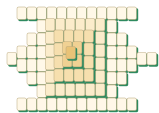
- Turtle: the single tail tile on the left and the two on the right stay free a long time. Leave them until you need them.
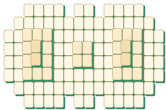
- Butterfly: clear the wing columns next to the body early, or the body tiles get stranded.
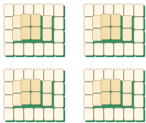
- Garden: work all four courtyards together so partners stay available everywhere.
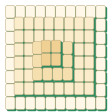
- Pyramid: take tiles from both the left and right edges of a tier, not just one side.
- Dragon: clear the ridge first. The wide bottom rows are a distraction.
- Fortress: work in from the short ends of each level, and keep a shuffle for late.
Questions people ask
What is the best strategy for Mahjong Solitaire?
Take tiles from the top layers first, pick the pair that frees the most tiles, and count the copies of a tile before you match it. Never leave two copies of a tile buried with no way to reach them.
How do you win Mahjong Solitaire more often?
Most losses come from pairs taken early that freed nothing. Clear high tiles first, keep flowers and seasons back as spare moves, and save shuffles for when fewer than about 30 tiles are left.
Should I use hints?
Use them when you are truly stuck. Our hints choose the pair that frees the most tiles, which is usually a good move, but you learn more by finding it yourself.
Why do I always get stuck near the end?
Because of choices made earlier. Near the end you run out of partners for tiles that were buried, and that usually means their partners were matched with each other earlier on.
Does it help to take flowers and seasons first?
Usually not. Each flower matches three others, which makes them the most flexible tiles on the board. Keep a pair or two back for later.