Mahjong Solitaire All layouts
All 24 Mahjong layouts
Every layout uses the same 144 tiles and the same rules. The shape is what changes, and the shape decides how hard the game is. Here they all are, sorted from easiest to hardest.
Want a surprise? Daily Mahjong picks a different layout every day.
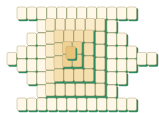
Turtle (classic)
The Turtle is the layout most people know from Mahjong Titans and Shanghai, and the one on our home page. It plays as a medium layout.
Collections
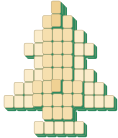
- Christmas Mahjong: six festive layouts, a tree, snowman, bell, stocking, wreath and present. They are extra to the 24 below.
- Mahjong Titans layouts: Turtle, Dragon, Cat, Fortress, Crab and Spider, the six layout names from the old Windows game.
- Animal Mahjong: the seven layouts shaped like animals, from the easy Butterfly to the hard Owl.
Easy layouts
Short rows and lots of free tiles. Good for learning, or for a calm ten minutes. More about easy Mahjong
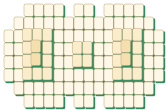 Butterfly MahjongEasy Two open wings and a slim body. The gentlest board to learn on. 3 layers · 68 free at start · 85% cleared
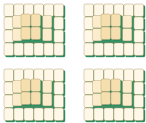 Garden MahjongEasy Four small courtyards that never block each other. Quick and calm. 3 layers · 64 free at start · 75% cleared
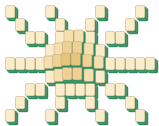 Spider MahjongEasy A tall body with eight thin legs spread wide. 5 layers · 50 free at start · 70% cleared
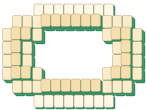 Arena MahjongEasy An oval ring of seating around an empty floor. 3 layers · 40 free at start · 65% cleared
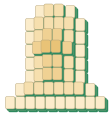 Tower MahjongEasy Narrow and tall, five tiles high at the top. 5 layers · 38 free at start · 60% cleared
Medium layouts
The classic Turtle, above, is one of these. You will need to think about which pair to take, but most games can be cleared.
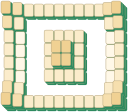 Castle MahjongMedium Outer walls, corner towers and a keep in the middle. 4 layers · 44 free at start · 50% cleared
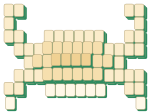 Crab MahjongMedium A domed shell with claws reaching out at each corner. 4 layers · 34 free at start · 50% cleared
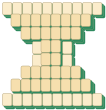 Hourglass MahjongMedium Two wide halves joined by a narrow waist. 3 layers · 20 free at start · 50% cleared
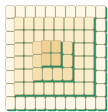 Pyramid MahjongMedium Four tiers stacked into a solid block. Peel it from the edges. 4 layers · 38 free at start · 45% cleared
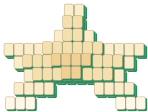 Star MahjongMedium Five points around a raised centre. 4 layers · 32 free at start · 45% cleared
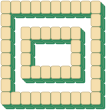 Well MahjongMedium Two square rings, one inside the other, three deep. 3 layers · 24 free at start · 45% cleared
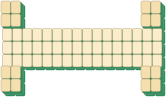 Bridge MahjongMedium A long double-deck span between four towers. 3 layers · 22 free at start · 35% cleared
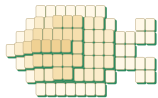 Fish MahjongMedium A rounded body with a raised middle and a split tail. 4 layers · 40 free at start · 35% cleared
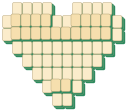 Heart MahjongMedium Two raised lobes narrowing to a single point. 3 layers · 26 free at start · 35% cleared
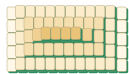 Ziggurat MahjongMedium Five stepped terraces rising to a flat top. 5 layers · 30 free at start · 35% cleared
Hard layouts
Long rows, deep stacks and few free tiles at the start. Expect to use a shuffle. More about hard Mahjong
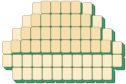 Cloud MahjongHard A soft-looking puff with a deceptively stubborn middle. 3 layers · 20 free at start · 30% cleared
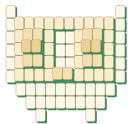 Owl MahjongHard Big stacked eyes, ear tufts and two little feet. 4 layers · 48 free at start · 30% cleared
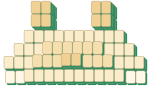 Temple MahjongHard A stepped hall with two tall pillars on top. 4 layers · 24 free at start · 30% cleared
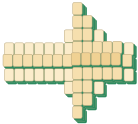 Arrow MahjongHard A long shaft and a raised head pointing right. 4 layers · 26 free at start · 25% cleared
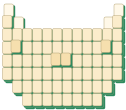 Cat MahjongHard A cat face with pointed ears, raised eyes and a nose. 3 layers · 22 free at start · 25% cleared
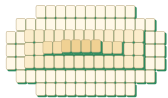 Dragon MahjongHard Long and low with a tall ridge down the middle. 4 layers · 24 free at start · 25% cleared
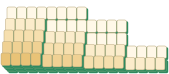 Stairs MahjongHard A staircase that climbs from one tile to five. 5 layers · 19 free at start · 25% cleared
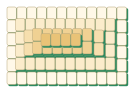 Fortress MahjongHard Five walls, one inside the next. The hardest board here. 5 layers · 30 free at start · 20% cleared
All layouts in one table
| Layout | Difficulty | Layers | Free at start | Cleared in tests |
|---|---|---|---|---|
| Butterfly Mahjong | Easy | 3 | 68 | about 85% |
| Garden Mahjong | Easy | 3 | 64 | about 75% |
| Spider Mahjong | Easy | 5 | 50 | about 70% |
| Arena Mahjong | Easy | 3 | 40 | about 65% |
| Tower Mahjong | Easy | 5 | 38 | about 60% |
| Castle Mahjong | Medium | 4 | 44 | about 50% |
| Crab Mahjong | Medium | 4 | 34 | about 50% |
| Hourglass Mahjong | Medium | 3 | 20 | about 50% |
| Turtle Mahjong (classic) | Medium | 5 | 35 | about 50% |
| Pyramid Mahjong | Medium | 4 | 38 | about 45% |
| Star Mahjong | Medium | 4 | 32 | about 45% |
| Well Mahjong | Medium | 3 | 24 | about 45% |
| Bridge Mahjong | Medium | 3 | 22 | about 35% |
| Fish Mahjong | Medium | 4 | 40 | about 35% |
| Heart Mahjong | Medium | 3 | 26 | about 35% |
| Ziggurat Mahjong | Medium | 5 | 30 | about 35% |
| Cloud Mahjong | Hard | 3 | 20 | about 30% |
| Owl Mahjong | Hard | 4 | 48 | about 30% |
| Temple Mahjong | Hard | 4 | 24 | about 30% |
| Arrow Mahjong | Hard | 4 | 26 | about 25% |
| Cat Mahjong | Hard | 3 | 22 | about 25% |
| Dragon Mahjong | Hard | 4 | 24 | about 25% |
| Stairs Mahjong | Hard | 5 | 19 | about 25% |
| Fortress Mahjong | Hard | 5 | 30 | about 20% |
How we rate difficulty
We dealt 40 boards on every layout and had the computer play each one five times, 200 games per layout. It picked moves the same way our Hint button does: of all the pairs it could take, it chose the one that freed the most tiles. Then we counted how often it cleared the board without a shuffle.
A careful person who plans ahead will win more often than that. But the order of the layouts stays much the same, and it tells you something useful: long rows matter more than height. Tower is five layers high and still easy, because its rows are short. Bridge is only three layers high and plays harder than the Turtle, because its rows run sixteen tiles across.
Every deal on every layout can be cleared. We check that when the board is dealt. Difficulty is about how easy it is to go wrong, not whether a solution exists.
Questions people ask
How many Mahjong layouts are there?
We have 24, all free. Each one uses the same 144 tiles and the same rules. Only the shape changes.
What is the easiest Mahjong layout?
Butterfly and Garden. Their rows are short and 68 and 64 tiles are free at the start. In our tests they were cleared in about 85% and 75% of games.
What is the hardest Mahjong layout?
Fortress, with five solid levels. It was cleared in only about 20% of our test games. Stairs, Arrow and Dragon come close.
How do you rate difficulty?
The computer played 200 games on every layout, choosing moves the way our Hint button does, and we counted how often it cleared the board without a shuffle. A higher number means an easier layout.
What makes a layout hard?
Long rows matter more than height. A tile in the middle of a long row stays pinned until its neighbours go, so wide boards with long unbroken rows are harder than tall narrow ones.